The Brief
- Best For
- LGBTQ+ beach lovers comfortable with hustle, groups where someone guards belongings
- Budget
- $$
- Do
- Swimming out past the waves at Ipanema for that Cristo Redentor moment, sunset at Pedra do Arpoador with the applauding crowd
- Skip
- If you can't handle constant vendor approaches, hate crowds, or travel solo (the theft risk is real)
Here's what you need to know about Rio's gay beaches before you pack your speedos: someone in your group will need to stay back and guard the belongings while everyone else swims. Always.
Jump to the good bits
Posto 9 Ipanema: Brazil's Gay Beach Headquarters
Copacabana: The Bigger, Busier Alternative
The Vendor Situation (Let's Be Honest)
Swimming Past the Waves: That Cristo Moment
Pedra do Arpoador: Sunset with Applause
LGBTQ+ Safety: The Nuanced Reality
Practical Beach Information
The Reality of Gay Beaches in Brazil
We spent several days at both Posto 9 on Ipanema Beach and Copacabana, right after our Amazon rainforest adventure. The beaches are genuinely inclusive, the rainbow flags wave proudly, and the atmosphere's exactly what you'd hope for from Brazil's most famous gay beach. But there's a catch. Several catches, actually.
You'll be approached by vendors every 5 minutes. Every. Five. Minutes. Caipirinhas, sunglasses, sarongs, massages, towels, fruit, cheese skewers, açaí, mate tea. It's relentless. And while everyone's friendly about it, the constant interruption becomes exhausting.
The theft concern is real. We witnessed attempted thefts during our visits, it's Rio reality unfortunately. You can't leave your phone, wallet, sunglasses, or bag unattended for a second. So while half of us swam, the other half stayed on towels playing guard duty. Not ideal when you've travelled to one of the world's best gay beaches.
Despite these annoyances, Posto 9 remains one of the best gay beaches we've visited. The energy is amazing and people were very welcoming, and swimming out past the waves to see Cristo Redentor towering over the city is genuinely special. You just need to go in prepared for the reality, not the Instagram version.
Posto 9 Ipanema: Brazil's Gay Beach Headquarters
Posto 9 sits on Ipanema Beach between lifeguard towers 8 and 9, at the bottom of Rua Farme de Amoedo. You'll know you're there when you see multiple rainbow flags marking the sand.
We arrived around noon (12pm) when the gay beach was properly buzzing. The crowd skews male, fit, and body-confident. Sungas (Brazilian speedos) are standard. Board shorts mark you as a tourist. The atmosphere's social and cruisy without being aggressive. Club promoters hand out flyers for gay parties happening that night. It feels like a beach club that happens to be on public sand.
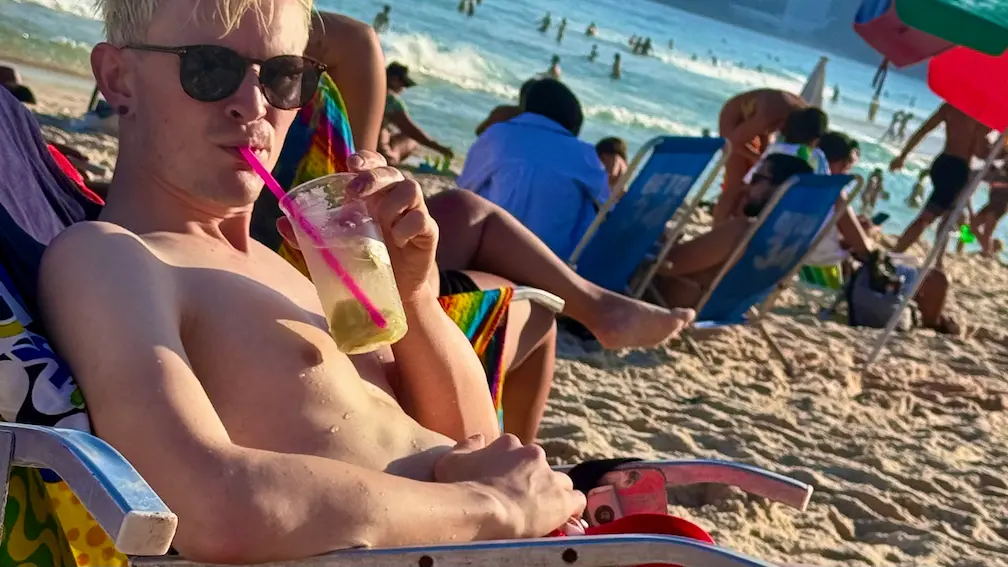
The scene: International mix with heavy Brazilian representation. We heard Portuguese, Spanish, English, German, and French within 10 minutes. We were really lucky to be with friends who are originally from Rio which massively helped with language as very few people spoke English (which is refreshing being British and being in a position you HAVE to try another language, we loved it!). Ages ranged from early 20s to 60s+, though the majority looked 25-40. The vibe's inclusive. Straight tourists wander through, families set up nearby, and nobody cares. Rio's beach culture genuinely embraces everyone.
What actually happened: We rented chairs and an umbrella from a beach vendor for about R$25 total (roughly £4). Our friend Marco, a Rio native we'd met through a friend, did all the negotiating in Portuguese. Without him, we'd have paid tourist prices, probably R$40-50. Language matters here.
The water's warm (felt like 24-25°C in June, which is their winter). Getting past the waves requires proper swimming ability. The surf breaks hard and close to shore. It took us a few minutes of timing and effort to get through. Once past, the water calms and you can float, taking in the view of the beach backed by mountains with Cristo Redentor visible atop Corcovado. That moment's worth the flight alone.
Timing tip: Midday (12pm-3pm) is peak. The rainbow flags are most visible, the crowd's largest, the energy's highest. Late afternoon (4pm-6pm) the beach empties as people head to bars on Rua Farme de Amoedo. Sunday gatherings are bigger, with impromptu celebrations sometimes kicking off spontaneously.
vs Copacabana gay section: Posto 9 wins for queer concentration and energy. Copacabana's gay area near Rainbow Kiosk (in front of Copacabana Palace Hotel) exists but feels less defined. Most LGBTQ+ locals told us they prefer Ipanema now. Copacabana's bigger and historically significant, but Ipanema's where the scene's at.
WORTH IT? Absolutely, but manage expectations about the vendor hustle and theft concerns. Best for groups where someone can rotate guard duty. Less ideal for solo travellers who want to swim freely. This is known as one of the world's best beaches for a reason!
Copacabana: The Bigger, Busier Alternative
Copacabana Beach stretches 4km along Avenida Atlântica. It's bigger, busier, and historically Rio's most famous beach. The iconic black-and-white wave-patterned boardwalk appears in every Rio postcard.
We visited Copacabana on a separate day from Ipanema. The beach culture's similar: vendors everywhere, families mixing with tourists, football games on the sand, and that constant energy Rio's famous for. The gay section historically centred around Rainbow Kiosk (the permanent beach bar near Copacabana Palace Hotel, around Posto 5-6), but the scene's diluted compared to Ipanema.
Our take: Copacabana felt slightly less hassled by vendors, but only slightly. Maybe one approach every 7 minutes instead of 5. The beach is wider, so there's more space to spread out. The water's equally challenging to swim in. The crowd's more local Brazilian families than international tourists compared to Ipanema.
For LGBTQ+ travellers specifically, we'd choose Posto 9 Ipanema over Copacabana every time. The queer energy's more concentrated, the rainbow flags create a visible community space, and the proximity to Rua Farme de Amoedo's gay bars makes the transition from beach to evening seamless.
That said: Copacabana's worth visiting for the iconic factor. The beach has history, the boardwalk's architectural, and watching sunset from here with a caipirinha feels properly Rio. Just don't expect the same gay scene density as Posto 9.
The Vendor Situation (Let's Be Honest)
Every 5 minutes, someone will try to sell you something. This isn't an exaggeration.
What they're selling:
- Caipirinhas (various flavours, carried in coolers)
- Sunglasses (questionable authenticity)
- Sarongs and beach towels
- Massages
- Queijo coalho (grilled cheese skewers)
- Açaí bowls
- Mate com limão (iced tea)
- Coconut water (fresh coconuts)
- Caipirinha ingredients to make your own
- Basically anything portable
The approach: Friendly but persistent. They'll show you their wares, quote prices, negotiate if you engage, then move along. If you say "não, obrigado" firmly, most respect it. Although they do their rounds and return 10 minutes later. The annoyance factor is high, especialy when your trying to read, nap (if you're napping keep hold of your things!), or have a conversation gets interrupted constantly. The flip side is this vendor culture is how locals make money. The beach economy supports families. We weren't angry about it, just tired. It's part of Rio's beach culture. Accept it or skip the beaches entirely.
Swimming Past the Waves: That Cristo Moment
Getting through the surf at both Ipanema and Copacabana requires decent swimming ability and timing. The waves break hard, close to shore, and with power. We watched several people struggle and give up. Others got knocked over repeatedly. You need to be a competent swimmer, time the wave sets, and commit to pushing through. It took us a few minutes of effort. Once past the break (maybe 15-20m out), the water calms dramatically and is 100% worth it.
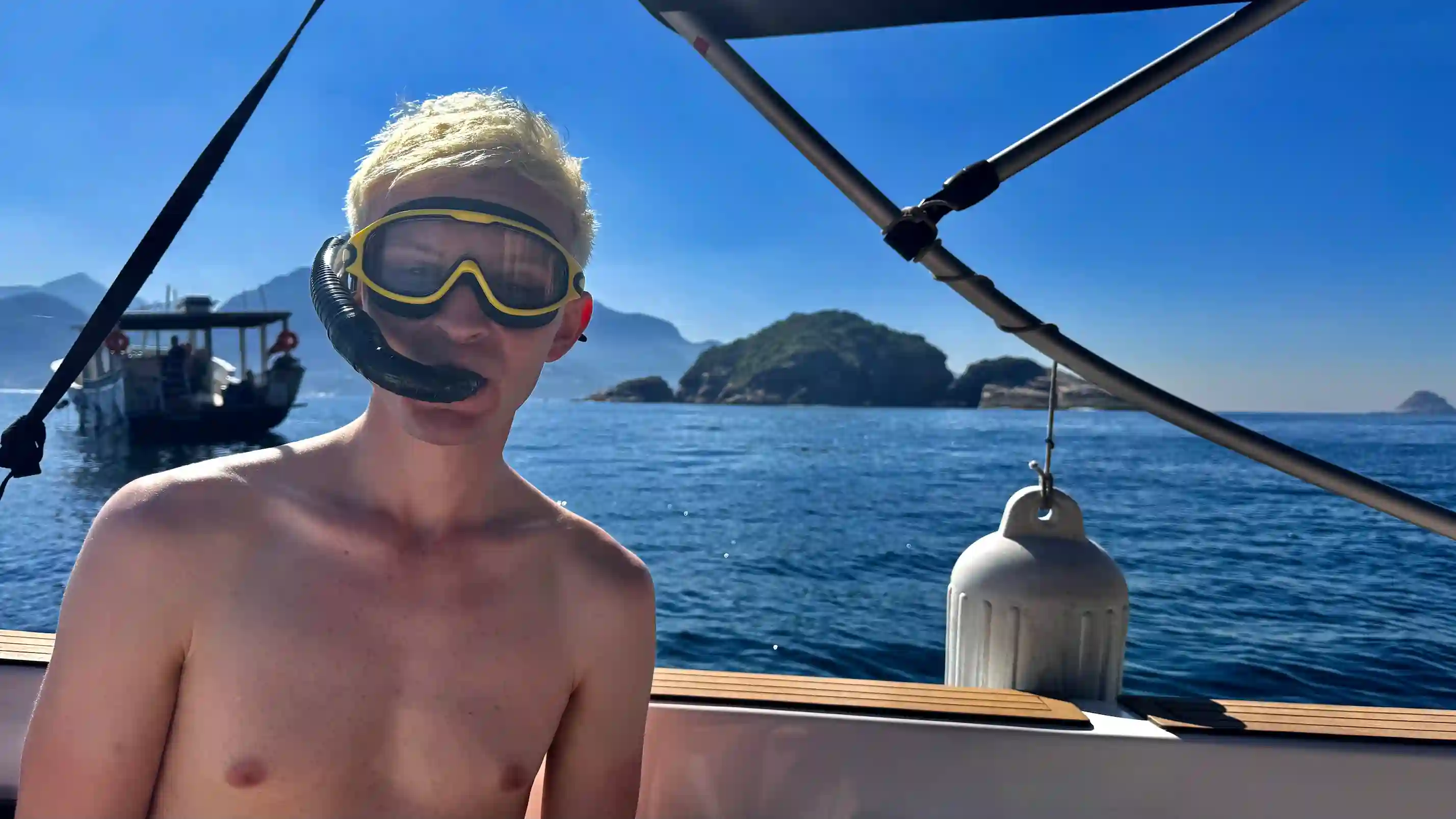
Floating in warm (very pleasant) South Atlantic water, looking back at the beach with its rainbow umbrellas and crowds, the mountains rising behind, and Cristo Redentor's white figure atop Corcovado in the distance. It's the postcard view, but you're in it. Properly in it.
The water temperature is warm enough that we stayed in without issue. June is Rio's winter, and the water felt around 24-25°C. Summer (December-March) would be warmer still, probably 26-28°C. Coming from Manchester UK, this felt tropical.
Who should skip it: Non-swimmers, anyone uncomfortable in surf, people with mobility issues. The beach is beautiful from the sand. You don't have to swim to enjoy it.
Who shouldn't miss it: Confident swimmers who want that Cristo Redentor moment. It's the defining Rio beach experience.
the famous Pedra do Arpoador Sunset
Pedra do Arpoador is the rocky outcrop separating Ipanema from Copacabana. Every single day, crowds gather here to watch the sun set behind the Dois Irmãos mountains.
We went one evening around 6pm (sunset time varies by season, June sunsets around 5.30-6pm). The rocks were already packed with people, locals and tourists mixed, perched on every available flat surface. Vendors (of course) sold caipirinhas and beer.
The sunset was genuinely beautiful. The sky turned orange and pink, the ocean reflected the colours, and Cristo Redentor glowed in the distance. Then, as the sun disappeared behind the mountains, the entire crowd applauded and cheered. Some whistled.
Timing: Arrive 30 minutes before sunset to secure a good spot on the rocks. The area gets crowded but never uncomfortably so. Stay for 20-30 minutes after sunset; the light show continues and the crowd disperses gradually. Walk back along Ipanema Beach toward Rua Farme de Amoedo after the sun has set. The gay bars and restaurants start filling up around 7pm. It's a natural progression from beach to sunset to nightlife, all within a 20-minute walk.
WORTH IT? Yes. It's free, it's beautiful, and the applauding crowd moment captures Rio's energy perfectly. One of our favourite Rio experiences.
LGBTQ+ Safety: The Nuanced Reality
Is Rio Safe for LGBTQ+ Travellers?
Brazil's legal protections for LGBTQ+ people are strong: same-sex marriage since 2013, discrimination based on sexual orientation prohibited nationwide, and homophobia criminalized as a form of racism since 2019. Trans people can change legal documents based on self-determination without medical or judicial approval.
The reality's more complicated. Brazil consistently reports the highest absolute number of LGBTQ+ murders globally, with violence disproportionately affecting trans women, especially trans women of colour. Most violence occurs outside major urban centres and tourist areas. Rio's Zona Sul (South Zone), where both beaches are located, has a thriving LGBTQ+ scene and is generally safe.
Our Experience at Posto 9 and Copacabana
We're two men and felt completely comfortable throughout our visits. Staff at nearby beach bars welcomed us warmly. Other beachgoers, gay and straight, were friendly. We held hands, leaned against each other, and showed subtle affection without any negative reactions.
Public displays of affection: Posto 9 specifically is one of the most LGBTQ+ affirming public spaces we've experienced anywhere. Same-sex couples openly showing affection is normal. We saw men kissing, couples cuddling, and nobody cared. The rainbow flags aren't just symbolic; they mark genuine community space.
Other queer travellers: Everywhere. Posto 9 attracts international LGBTQ+ visitors from across South America, North America, and Europe. The crowd's visibly, proudly queer during peak hours (noon-3pm). Copacabana had fewer obviously LGBTQ+ beachgoers but still felt safe.
The Real Safety Concern: Theft
Theft is the primary safety issue on Rio beaches, affecting everyone equally regardless of sexuality. We witnessed two theft attempts during our visits:
- Someone's phone grabbed from their bag while they were in the water (the thief ran immediately)
- A tourist's backpack snatched when they turned away for 10 seconds
- Alex having his phone stolen in one of the gay bars, snatched right out of his hand.
Neighbourhood Safety
Ipanema/Leblon (Zona Sul): Safe during the day, generally safe at night on main streets. Well-lit, heavily populated, strong police presence. Walk confidently, stay aware, avoid displaying valuables.
Copacabana: Safe during the day, exercise more caution at night. Stick to Avenida Atlântica (the main beach avenue) and well-lit side streets. The neighbourhood has a reputation for petty crime after dark.
Transport: Uber and taxis are safe, and so incredibly cheap! We would avoid buses but especially at night.
Emergency Contacts
- Brazil emergency: 190 (police), 192 (ambulance), 193 (fire)
- Rio tourist police: +55 21 2332-2924 (English support)
- LGBTQ+ support Brazil: Grupo Gay da Bahia +55 71 3322-2552
- UK Foreign Office Brazil advice: gov.uk/foreign-travel-advice/brazil
- US Embassy Rio: +55 21 3823-2000
Cultural Context
Rio's beach culture is body-positive and sexually liberated. Speedos (sungas) and tiny bikinis are standard across all ages and body types. This applies to straight and LGBTQ+ beachgoers equally. The focus on bodies isn't inherently sexual; it's cultural. Brazilians are comfortable with skin in beach contexts.
For LGBTQ+ travellers specifically, Rio has a massive Pride parade (usually November), numerous gay bars and clubs in Ipanema and Copacabana, and a visible queer community. São Paulo's Pride is larger, but Rio's scene is well-established and welcoming.
Our Honest Assessment
We felt safer as two men in Rio than in many parts of the UK or US. The LGBTQ+ acceptance at Posto 9 specifically exceeded our expectations. The theft concern is real but manageable with awareness. Street crime affects tourists of all sexualities; it's not LGBTQ+ targeted.
Would we recommend Rio's gay beaches to other LGBTQ+ travellers? Absolutely. The experience of being openly queer in such a beautiful, accepting beach environment is rare globally. Just go prepared: bring minimal valuables, travel in groups where possible, and always have someone guard belongings during swims.
Practical Beach Information
Getting There
To Ipanema (Posto 9):
- Metro: Green Line (Linha 1) to General Osório station, then 8min walk to beach
- Bus: Multiple routes along Avenida Vieira Souto
- Uber/taxi from Copacabana: R$15-20, 10min drive
- Walk from Copacabana: 35-40min along the beach
To Copacabana:
- Metro: Green Line (Linha 1) to Cardeal Arcoverde, Siqueira Campos, or Cantagalo stations
- Bus: Extensive coverage along Avenida Atlântica
- Uber/taxi from Ipanema: R$15-20, 10min drive
What to Bring
Essential:
- Waterproof pouch for phone/cash/cards
- Sun cream SPF 50+ (reapply every 90min)
- Sunglasses and hat
- Beach towel (unless renting chairs)
- Reusable water bottle
- Small amount of cash (R$50-100) for vendors
Don't bring:
- Expensive jewellery
- Laptop or tablet
- Passport (leave at hotel)
- Multiple credit cards
- Anything you can't afford to lose
Beach Costs (June 2024)
- Chair rental: R$15-20 (with Portuguese negotiation), R$30-40 (tourist price)
- Umbrella rental: R$15-20 (negotiated), R$30-40 (tourist price)
- Caipirinha: R$15-20 (negotiated), R$25-35 (tourist price)
- Coconut water: R$10-15
- Açaí bowl: R$15-25
- Queijo coalho (cheese skewer): R$10-15
- Beach massage (30min): R$40-50 (negotiated), R$60-80 (tourist price)
Currency note: R$1 (Brazilian Real) = roughly £0.16 or US$0.20 (exchange rates fluctuate). ATMs widely available in Ipanema and Copacabana.
When to Visit
Summer (December-March):
- Hottest and most humid (30-35°C)
- Biggest crowds
- Liveliest beach atmosphere
- Peak tourist season
- Higher prices
Winter (June-August):
- Cooler (20-25°C) but still warm
- Fewer crowds
- Water slightly cooler (22-24°C)
- Better hotel deals
- We visited in June, weather was perfect
Shoulder seasons (April-May, September-November):
- Ideal temperatures (25-28°C)
- Moderate crowds
- Good value
Best Times of Day
Morning (8am-noon): Quieter, cooler, fewer vendors, easier to secure good spot. Less gay crowd concentration at Posto 9.
Midday (noon-3pm): Peak time at Posto 9, largest LGBTQ+ crowd, rainbow flags most visible, hottest sun. This is when to go for the full gay beach experience.
Late afternoon (4pm-sunset): Beach empties as people head to bars, gentler sun, beautiful light for photos. Quieter but less energetic.
Language
Beach vendors speak limited English. Basic Portuguese helps with negotiations:
- "Quanto custa?" (How much?)
- "Muito caro" (Too expensive)
- "Não, obrigado/obrigada" (No thanks - masculine/feminine)
- "Pode fazer por X reais?" (Can you do X reais?)
Nearby Facilities
Posto 9 Ipanema:
- Public toilets near Posto 9 (basic, often crowded)
- Rua Farme de Amoedo (2min walk): restaurants, bars, ATMs, shops
- Numerous beach bars along Avenida Vieira Souto
Copacabana:
- Public toilets scattered along beach (similar condition)
- Avenida Atlântica: extensive restaurant and bar coverage
- ATMs every few blocks
After the Beach
Ipanema gay scene:
- Rua Farme de Amoedo comes alive from 7pm
- Galeria Café: art, performances, drinking, dancing (Rua Teixeira de Melo 31)
- To Nem Ai bar: corner spot, great people-watching
- Multiple gay-friendly restaurants and bars within 5min walk of Posto 9
Copacabana nightlife:
- La Cueva: oldest gay bar in Latin America, retro music (Rua Miguel Lemos 51)
- Fosfobox: pink couches, flamingo sculptures, drag shows (near Copacabana Beach)
- More mixed/straight scene compared to Ipanema
Links to More Brazil Content
For more on our Brazil adventures, check out:
The Verdict
Rio's gay beaches deliver exactly what they promise: rainbow flags, inclusive vibes, beautiful water, and that Cristo Redentor moment when you swim out past the waves. Posto 9 Ipanema is genuinely one of the best gay beaches we've experienced globally. The energy, the international crowd, the body-positive atmosphere, it's all there.
If you can handle the hustle and travel with at least one other person for guard duty rotation, Rio's beaches are absolutely worth visiting. The LGBTQ+ acceptance at Posto 9 specifically exceeded our expectations. We held hands, showed affection, and felt completely welcomed in a way that's still rare in many beach destinations globally.
Ipanema wins over Copacabana for queer travellers. The rainbow flags create visible community space, the gay crowd concentrations is higher, and the proximity to Rua Farme de Amoedo's bars makes the beach-to-nightlife transition seamless.
Best for: LGBTQ+ couples or groups seeking inclusive beach culture with energy, confident swimmers who want that floating-in-the-ocean-looking-at-Cristo moment, travellers comfortable with constant vendor approaches, people who understand beach guard duty is mandatory.
Skip if: You travel solo and want to swim freely (the theft risk is too high to leave belongings), you need peaceful beach relaxation without interruption, you're not a confident swimmer (the waves are proper waves), you expect Northern European standards of organisation and quiet.
Would we return? Yes, with the same awareness and precautions.
For more LGBTQ+ travel guides and honest beach reviews, explore our LGBTQ+ section or check out our Brazil destination guides. Follow us on Instagram @boyfriendswhotravel
Travel with us, always with love and a little luxe 🌈✈️
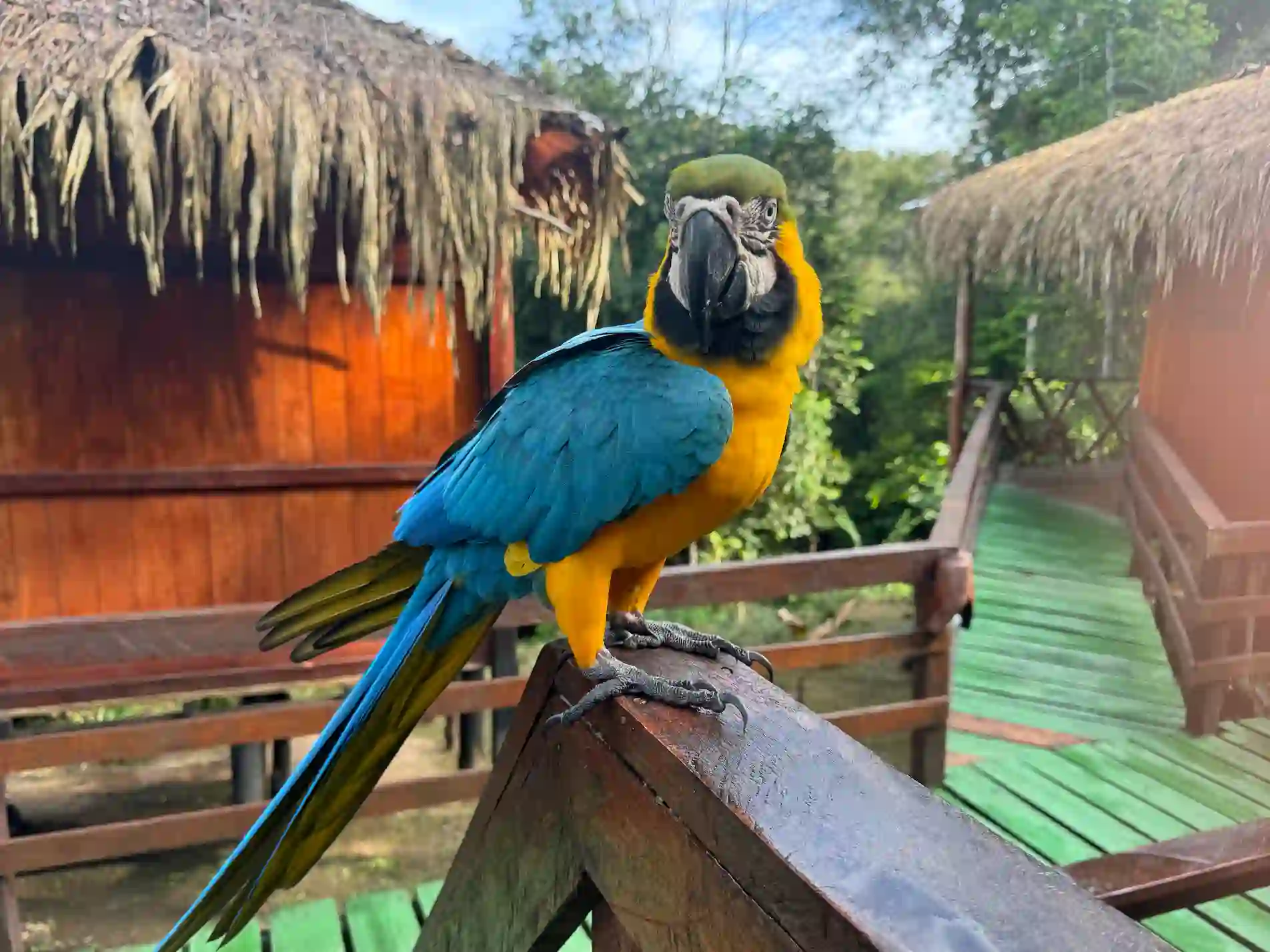
Amazon Rainforest Tour: 4 Days at Tupana Lodge (The Honest Guide)
Our 4-day Amazon rainforest tour from Manaus cost US$533pp including overnight jungle camping. Here's what wildlife we actually saw, why we needed a bathroom buddy at 2am, and whether it's worth the 5-hour transfer.
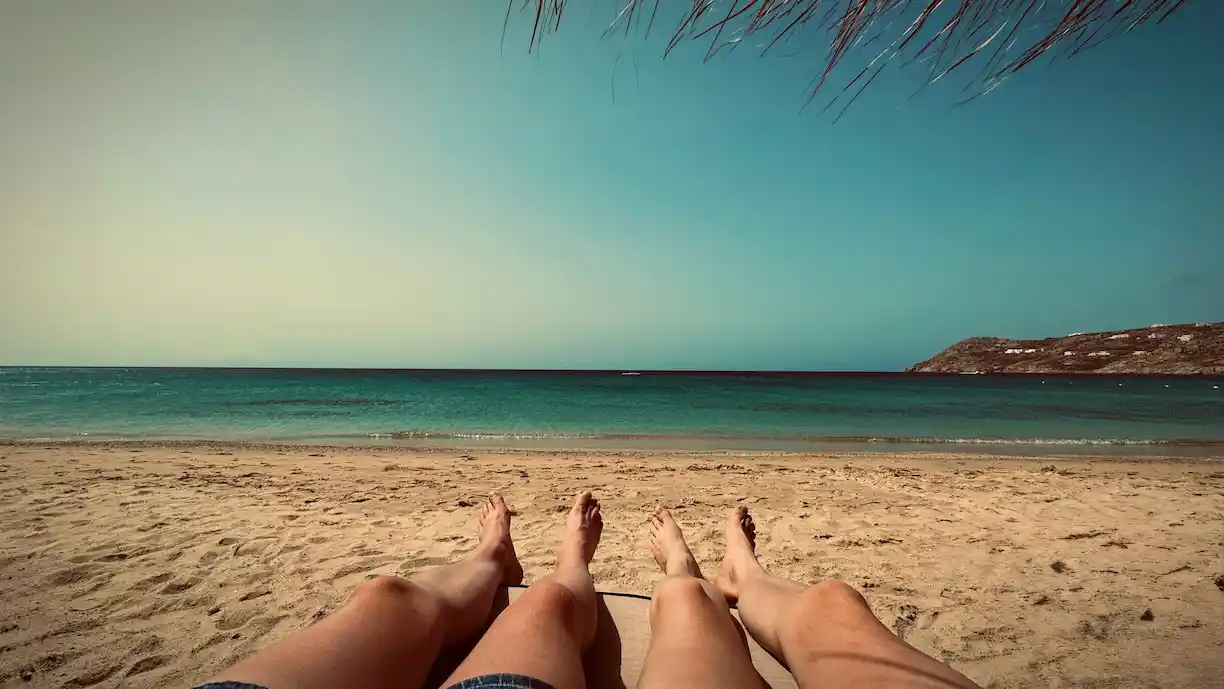
Best Gay Beaches Europe: Where We've Been & Where We're Going in 2026
We've done gay beaches around the world, and now we're planning Europe 2026: Sitges, Maspalomas, Ibiza. Here's our honest comparison of costs, crowds, and which beaches are actually worth the flight.
Barcelona Weekend Itinerary 2026: Beaches, Gay Bars & Gaudí Perfection
Our Barcelona weekend guide: Mar Bella gay beach, Boxer Bar in Eixample, Sagrada Familia at sunrise, and where to drink vermut. We visited in 2024 and fell hard for this city. Here's the perfect 3-day itinerary.